

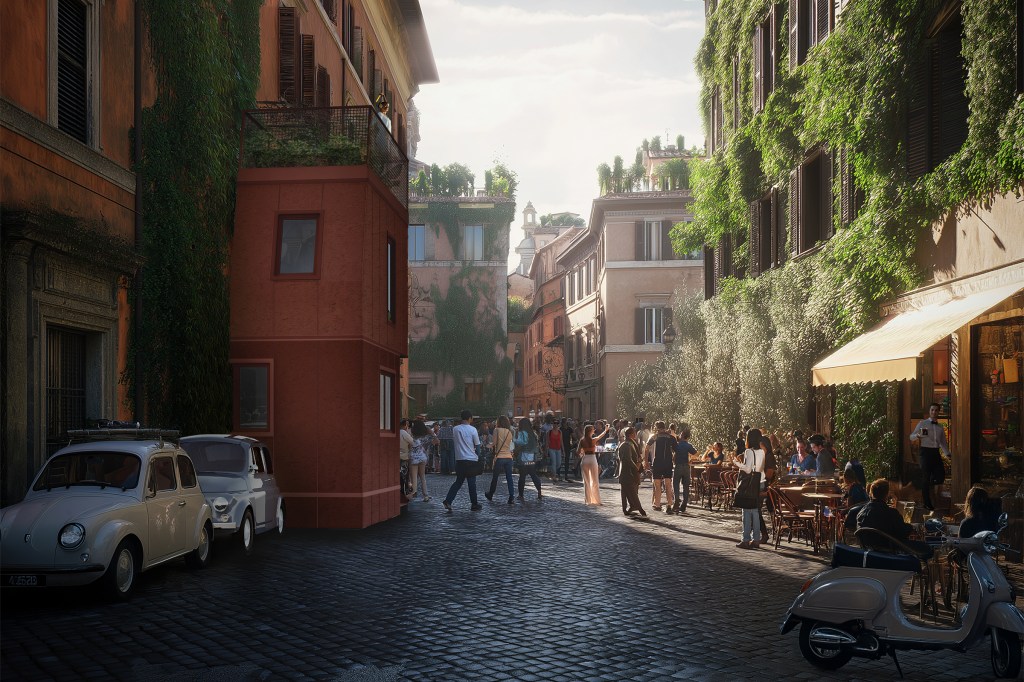
“From morning strolls to evening aperitivos, live alongside the streets, cafés, and piazzas of Rome”
SPOT
A Microhome for the cities of tomorrow
A GLOBAL URBAN CRISIS
Cities are running out of homes, not space. While millions are priced out of urban life, vast areas of our cities lie empty every day serving cars instead of people.
THE HUMAN ANGLE: YOUNG PROFESSIONALS AND URBAN EXCLUSION
Across modern cities, housing costs outpace wages. Rents eat up half of young professionals’ income; mortgages are out of reach. The result is predictable: long commutes, shared apartments, and the slow exodus of a generation from the city. Urban centers, once places of opportunity, are turning into exclusive zones for offices, tourists, and the wealthy. A generation that values flexibility and mobility is trapped by systems built for permanence and ownership.
GLOBAL HOUSING COST BURDEN
Based on OECD data, the share of income spent on rent has steadily increased since 2015. On average, renters worldwide now allocate over one-third of their income to housing, compared to roughly one-quarter before 2015. This growing imbalance highlights how wages have failed to keep pace with urban rent inflation.
URBAN RENT BURDENS
Major urban centers show even stronger disparities. In cities like London, Los Angeles, and Paris, renters regularly spend 30–40% of their income on housing, far above affordability thresholds of 25%. Meanwhile, cities such as Copenhagen or Tokyo show lower ratios due to stronger regulation and alternative housing policies.
Long-term renters face stagnant mobility and shrinking living space, while younger residents are increasingly priced out of central locations altogether.
GLOBAL DRIVERS OF THE HOUSING CRISIS
This is not a local failure but a systemic one. Housing supply lags far behind demand, throttled by restrictive zoning, slow bureaucracy, and inflated construction costs. Meanwhile, real estate speculation drives prices up and leaves homes vacant. At current rates, the world needs 96,000 new homes every day just to keep up. A pace cities can’t reach with conventional building.
Urban Growth AND Housing Need
Currently there are roughly 8 billion people living on earth and around half of the population is living in cities. By 2050, the world’s cities will absorb 2.5 billion new residents, according to the United Nations. As urban populations swell, the demand for affordable, well-located homes will far outpace conventional construction capacity. Without new models of compact, adaptable housing, cities risk deepening the divide between those who can live near opportunity and those pushed to the periphery.
THE SPATIAL IRONY:
PARKING VS. HOUSING
In today’s cities, space is not equally shared. While land for people and housing grows scarcer, land for cars remains abundant. Across global cities, 8–20% of all urban land is dedicated to parking, most of it is off-street and often empty overnight. This imbalance is stark across contexts: car-centric American cities allocate vast surface lots, dense Asian cities maintain rigid parking structures, and European cities still devote over half of public space to roads and car storage combined.
THE DEBATE:
CAR STORAGE OR URBAN LIFE?
The urban priority remains skewed: stationary vehicles are given more room than human lives. Younger generations want access, not ownership. They want vibrant neighborhoods, not asphalt deserts. Cities that cling to car-first planning risk hollowing out their centers. Cities that reclaim parking for people can restore density, affordability, and life.
WHY SPOT, WHY NOW
SPOT is a compact, self-sufficient home that fits within a single parking space. Prefabricated, movable, and carbon-light, it reclaims overlooked land and turns it into livable space. Every underused parking stall becomes a potential dwelling. Fast to install, reversible, and adaptable. SPOT transforms what cities already have, too much parking, into what they desperately need: affordable, central housing.
Beyond its footprint, SPOT challenges the imbalance at the heart of modern cities: we dedicate up to 40% of urban land to cars while housing costs push people out. By inserting living space where vehicles once stood, SPOT reclaims proximity, flexibility, and community. It doesn’t require new land, heavy infrastructure, or long approvals. It uses what’s already built. Its modular system allows quick deployment across rooftops, surface lots, or underused structures, scaling housing supply instantly and sustainably.
More than a micro-home, SPOT is a catalyst for urban transformation. It proposes a lighter, more reversible model of living. One that evolves with the city rather than consuming it. Each unit operates autonomously yet can connect to existing networks when needed, bridging independence with resilience.
From Parking
to Living
Each unit is energy-efficient and self-sufficient, integrating renewable systems and water management. Modularity and easy deployment ensures adaptability: SPOT can shift as urban policies evolve or as demand changes. It’s a housing model aligned with how younger generations live: mobile, flexible, connected, and environmentally aware.
SPOT is not just a product; it’s a strategy to turn urban leftovers into life-giving opportunities. A pragmatic, low-impact step toward more resilient, inclusive, and human-centered cities.
FLEXIBILITY IN EVERY URBAN CONTEXT
SPOT is not a tailor-made solution, but an adaptable urban tool. Its modularity and prefabrication allow it to integrate into radically different urban contexts, responding to local needs without losing its identity. To demonstrate this flexibility, SPOT is tested across three global contexts, Los Angeles’s oversupply of parking, Tokyo’s underused yet rigid parking infrastructure, and Copenhagen’s deliberate shift from cars to climate-focused urban living. Together, they show how SPOT can respond to different pressures, scarcity, regulation, affordability while delivering the same result: turning idle space into vibrant, human-centered housing.
Parallel configuration
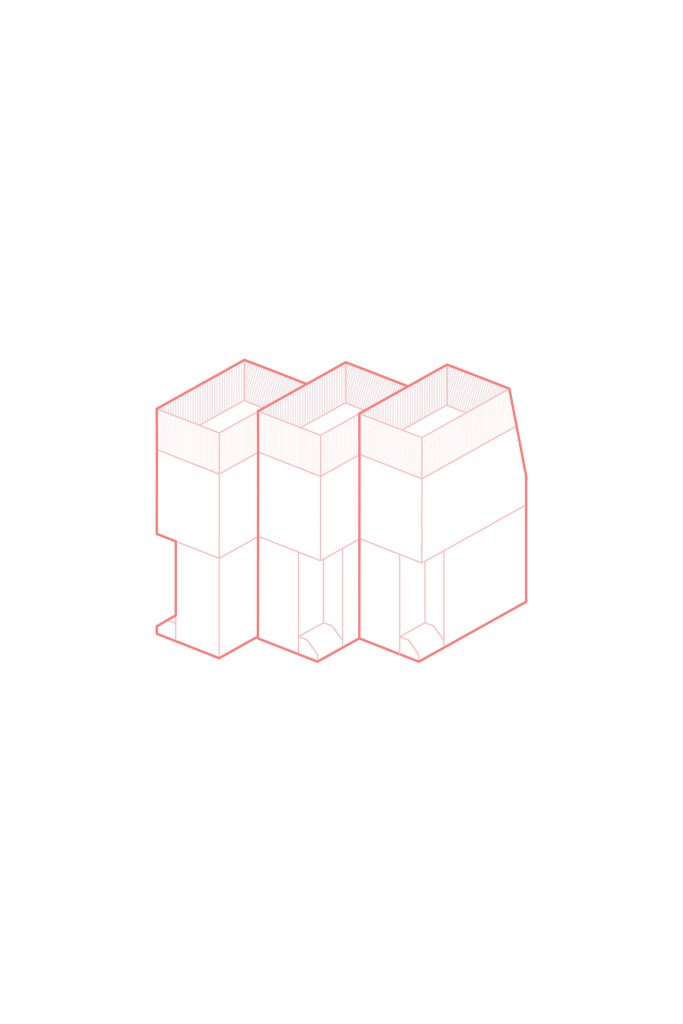
Deployed along existing curbs, the parallel arrangement maintains the rhythm of façades and street life. SPOT modules orient longitudinally, optimizing daylight through full-length glazing on one side while preserving privacy with modulated openings on the other. This configuration ensures minimal disruption to circulation and maximizes exposure to the public realm.

Perpendicular configuration
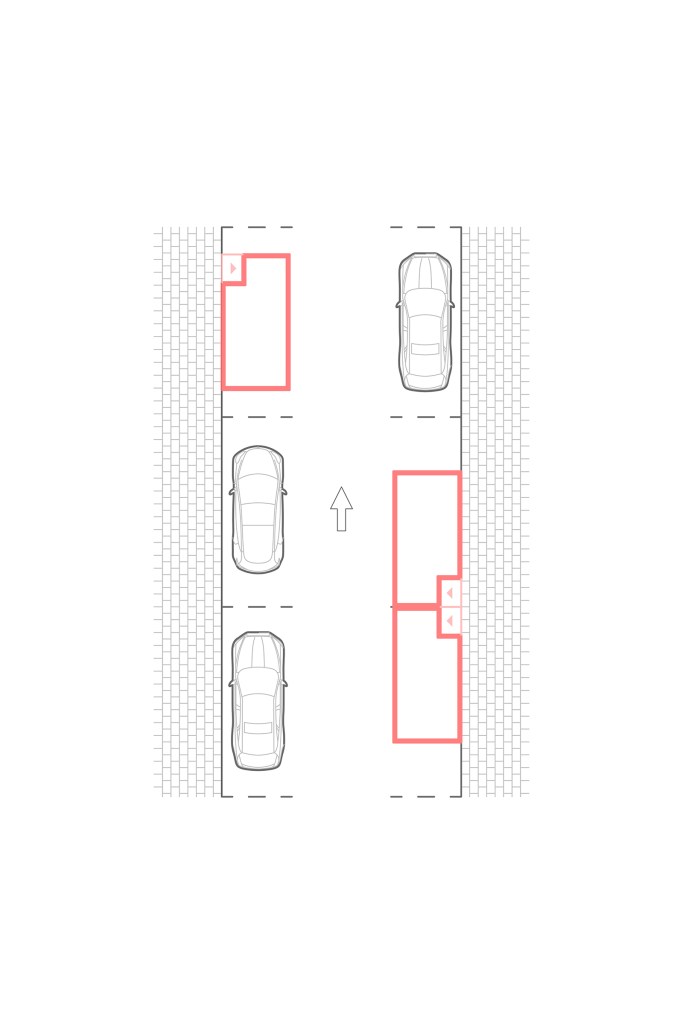
When organized at 90°, SPOT becomes a compact urban typology, ideal for parking lots, courtyards, or reclaimed infrastructure edges. Modular side walls and mirrored layouts enable paired or back-to-back arrangements, ensuring privacy through offset openings and controlled visual corridors. This configuration enhances density while maintaining spatial comfort and natural ventilation.
Angled configuration
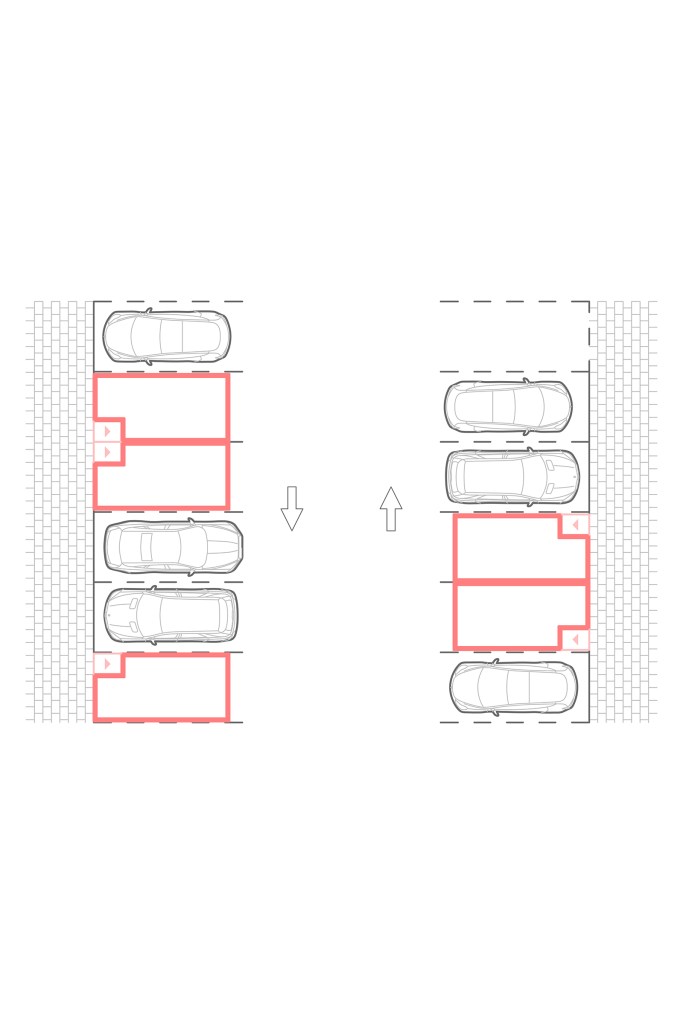
In irregular or sloped contexts, the 45° configuration demonstrates SPOT’s geometric versatility. By rotating modules toward optimal solar orientation, it improves daylight access and passive heating, while staggered placement enhances privacy between units. This angle-based adaptability allows SPOT to fit within constrained or transitional urban zones without design compromise.

Copenhagen, Denmark
Copenhagen represents Europe’s progressive approach: parking is no longer an entitlement but a policy tool to cut car use. The city capped central parking, raised prices, and reduced car commuting from 22% to 16% in under a decade. Across Europe, similar reforms are dismantling outdated “minimum parking” policies in favour of caps and reallocations.
Even so, parking still consumes prime public space. In Copenhagen, 58% of public land (excluding buildings) serves cars, roads, sidewalks, and parking combined. Municipalities are actively seeking reversible, low-carbon ways to reclaim this land without major construction.
SPOT aligns perfectly: it reuses existing stalls, is modular and movable, and reduces the CO₂ burden of new buildings. Pilots can target municipal lots, kerbside bays, and rooftops with time-limited permits, making them politically feasible and easy to reverse if needed.
Why Copenhagen: a regulatory climate that welcomes experiments, strong climate goals, and an urgent need for central affordable housing make it an ideal European showcase for SPOT.
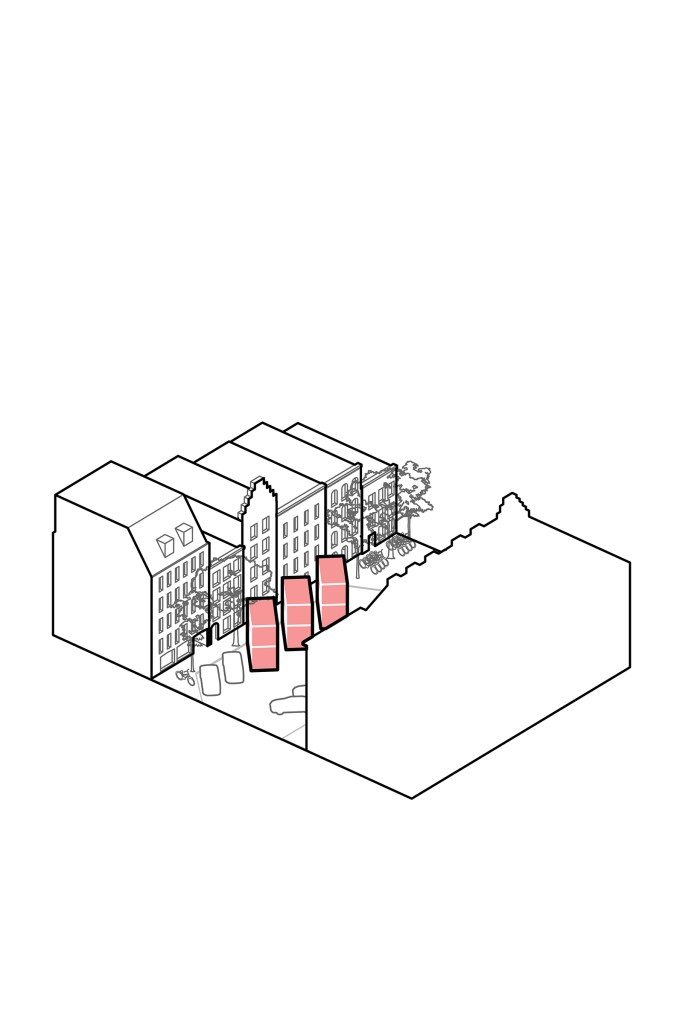
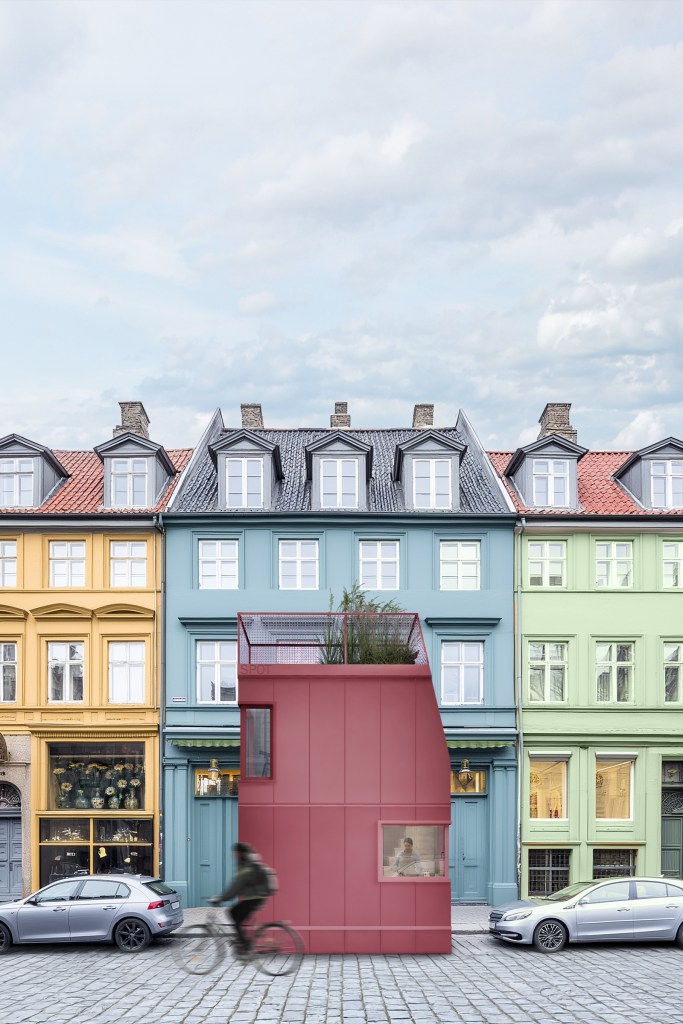
“Amid Copenhagen’s colorful streets and cozy corners. Nestled in historic lanes, steps from the waterfront, and part of everyday Danish life.”
Los Angeles, California
Los Angeles is the ultimate car city and the ultimate paradox of parking and housing. The county devotes more land to parking than to roads, with 2 billion spaces for 250 million cars nationwide (6+ per car). In LA alone, parking consumes 40% more land than roadways. Yet many of these stalls sit empty every night, a product of outdated minimum parking laws that created oversupply.
Meanwhile, the housing crisis is acute. LA has one of the least affordable markets in the U.S.: median rent ~$2,700/month, with over 50% of renters cost-burdened and 75,000 homeless residents (2023 count).
SPOT directly addresses this imbalance. Each micro-home occupies one stall, reprogramming oversupplied asphalt into much-needed living space. In a city with millions of unused stalls, even a small pilot could house thousands without new land or heavy infrastructure.
Why LA: the oversupply of parking, urgent housing shortage, and recent removal of parking minimums make it a perfect test bed for SPOT.
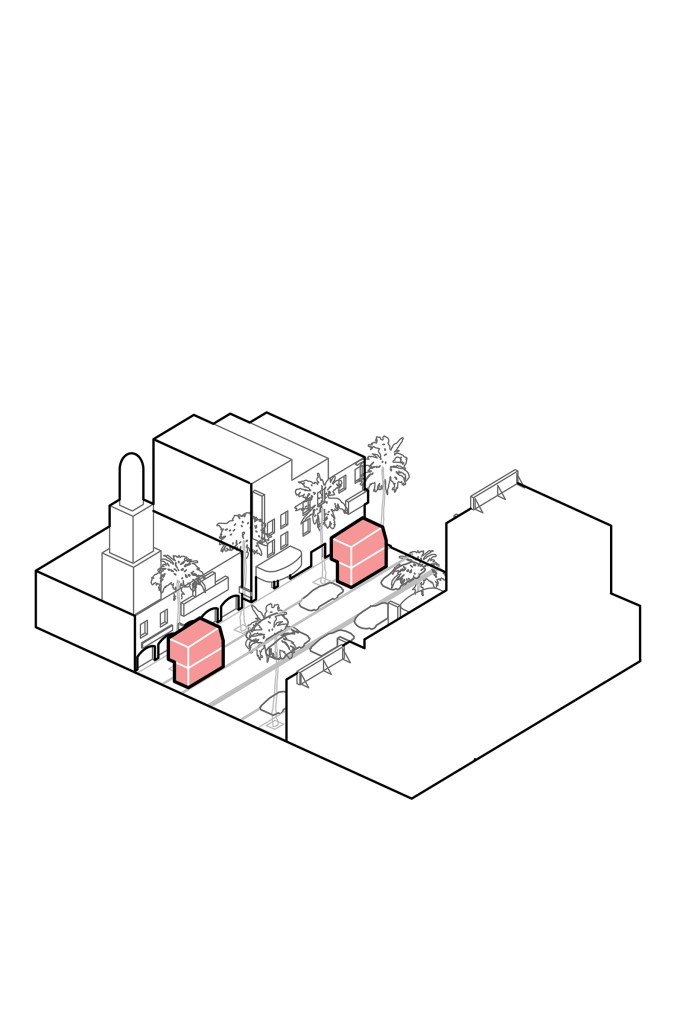

“In the heart of Los Angeles, amid palm-lined streets and bustling avenues. Bright, bold, and ready to reclaim under appreciated urban space.”
Tokyo, Japan
Tokyo is the mirror opposite of LA: a city with strict parking rules and low car ownership. In Japan, buying a car requires proof of a private space (“garage certificate”); overnight street parking is illegal. As a result, Tokyo has only 0.32 cars per household (vs. U.S. ~2), yet inner-city areas still devote an estimated 20–30% of land to parking.
The paradox is that while cars are few, the rigid requirement to provide parking has produced underused lots, multi-storey garages, and rooftop stalls. Combined with narrow streets and world-class public transit, this stock is increasingly mismatched to real demand.
At the same time, central Tokyo faces extreme housing scarcity. Land is expensive, planning constraints are rigid, and urban density leaves little room for new development.
SPOT can slot into these hidden reserves of parking: vacant rooftop decks, empty levels of buildings, void spaces or surface lots at night. Instead of fighting car culture, SPOT leverages surplus capacity inside the existing system to add homes where new land doesn’t exist.
Why Tokyo: high density, strict parking policy, and declining car ownership open a pathway to reuse.
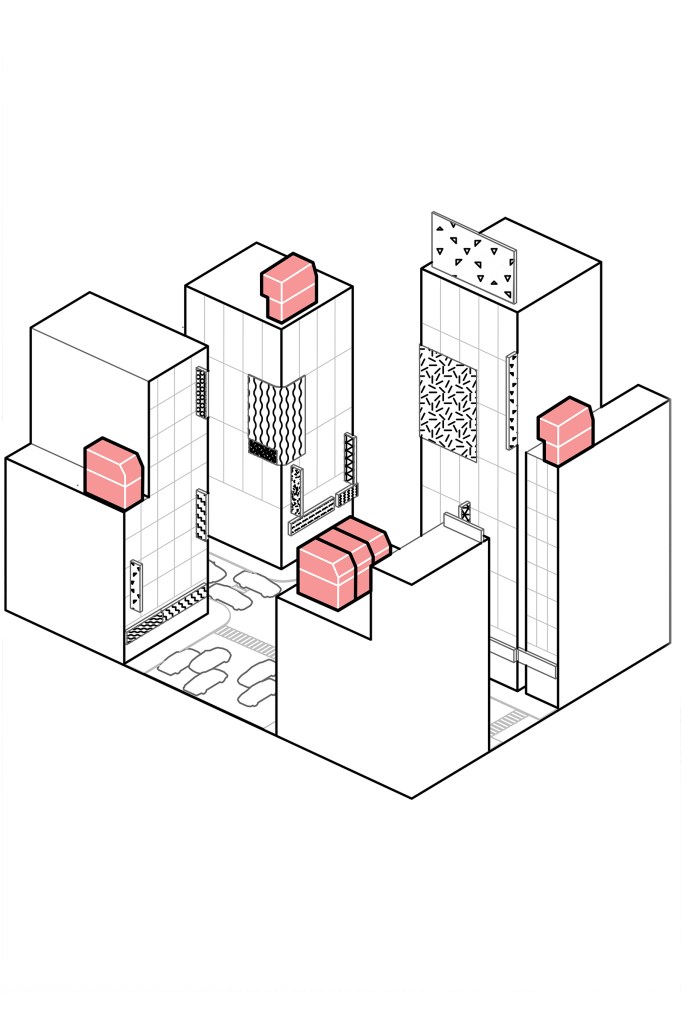

“Atop a Tokyo parking deck, turning underused space into a small, elevated community. Unimaginably integrated seamlessly into the urban fabric.”
COMPACT SPACE,
FLEXIBLE LIFE
SPOT is not a capsule or compromise. It’s a deliberate statement about how little we actually need to live fully, and how well we can live when design values people over cars. It represents a new kind of urban home.
Small in size, generous in experience.
Full House
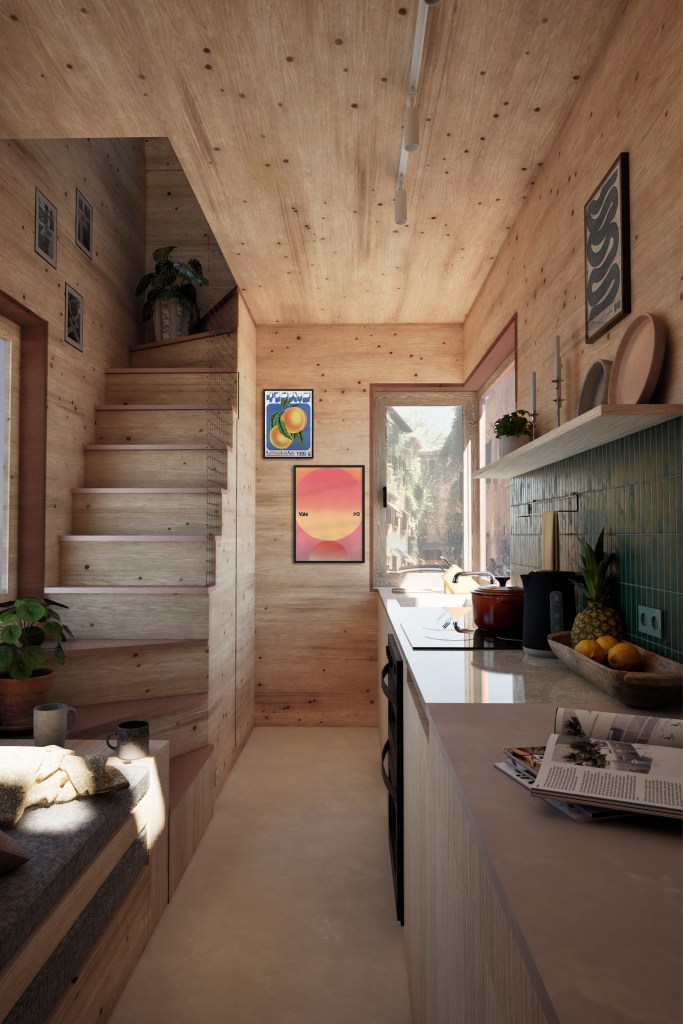
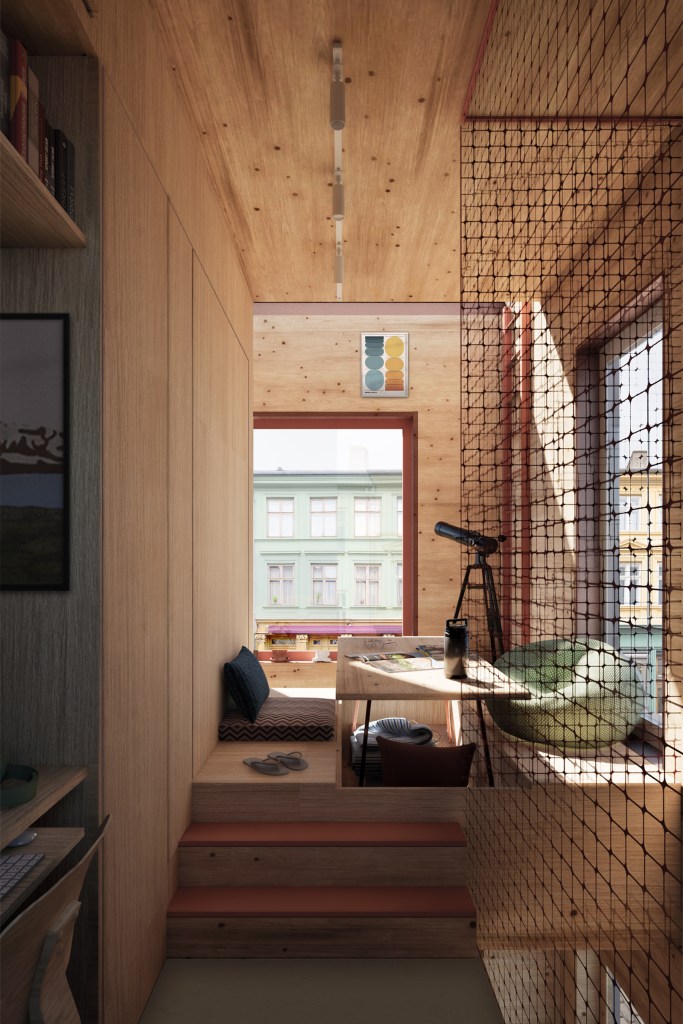
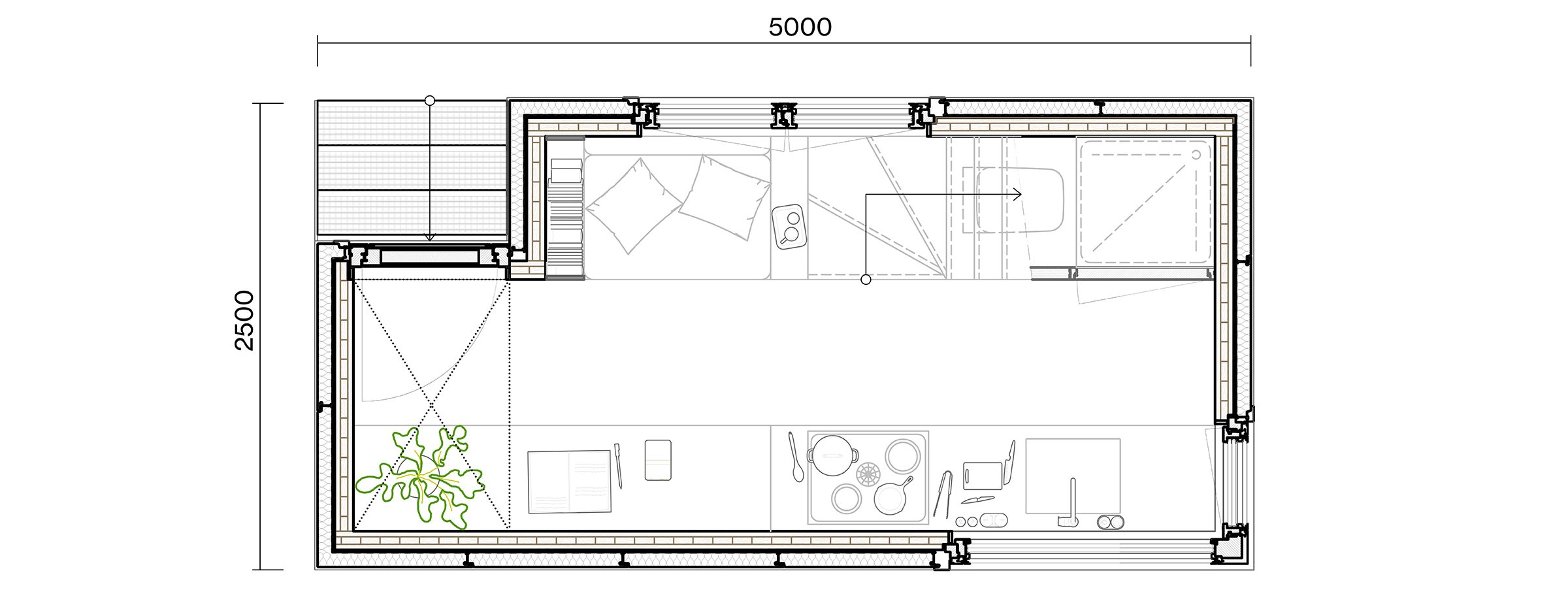
SPOT is designed around the essentials of living well in the city. Light, air, privacy, and a sense of belonging. Within a footprint no larger than a parking space, it creates a complete home: a place to wake up with sunlight, to cook, to work, to rest, and to reconnect.
The large windows connect the interior to the city while maintaining intimacy. The modular layout allows flexible use: a home office during the day, a calm retreat at night. The accessible roof deck and integrated greenery extend life outdoors, offering rare breathing space in dense surroundings.
Freedom in the City
SPOT connects residents to the urban fabric, transforming overlooked parking spaces into vibrant pockets of life. By reclaiming land for people, it brings city streets, squares, and terraces into daily reach, reducing commute times and fostering spontaneous social encounters. Compact but flexible, SPOT frees time and mental space, proving that thoughtful design can create both freedom and belonging in the heart of the city.

Work and Day Routine
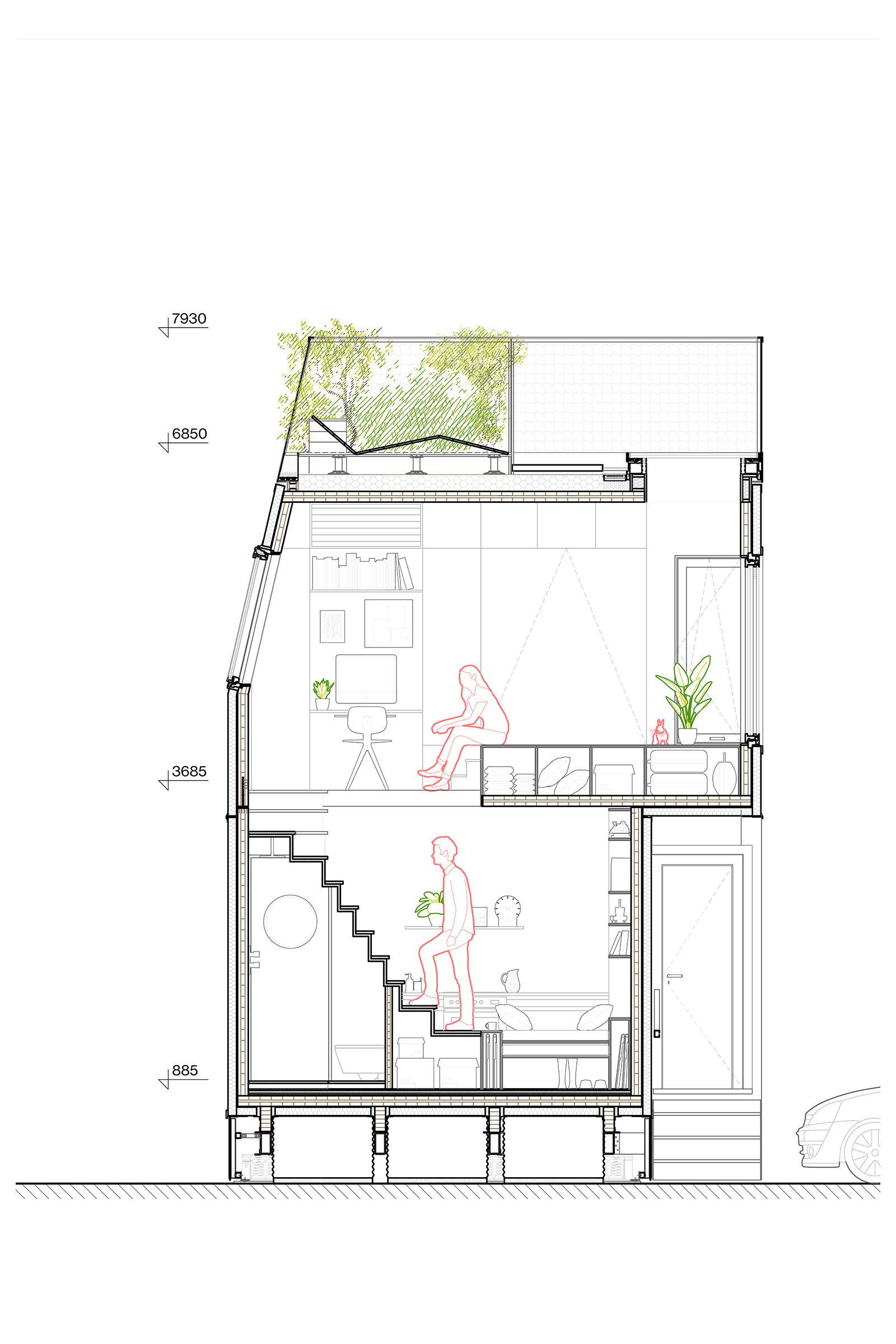
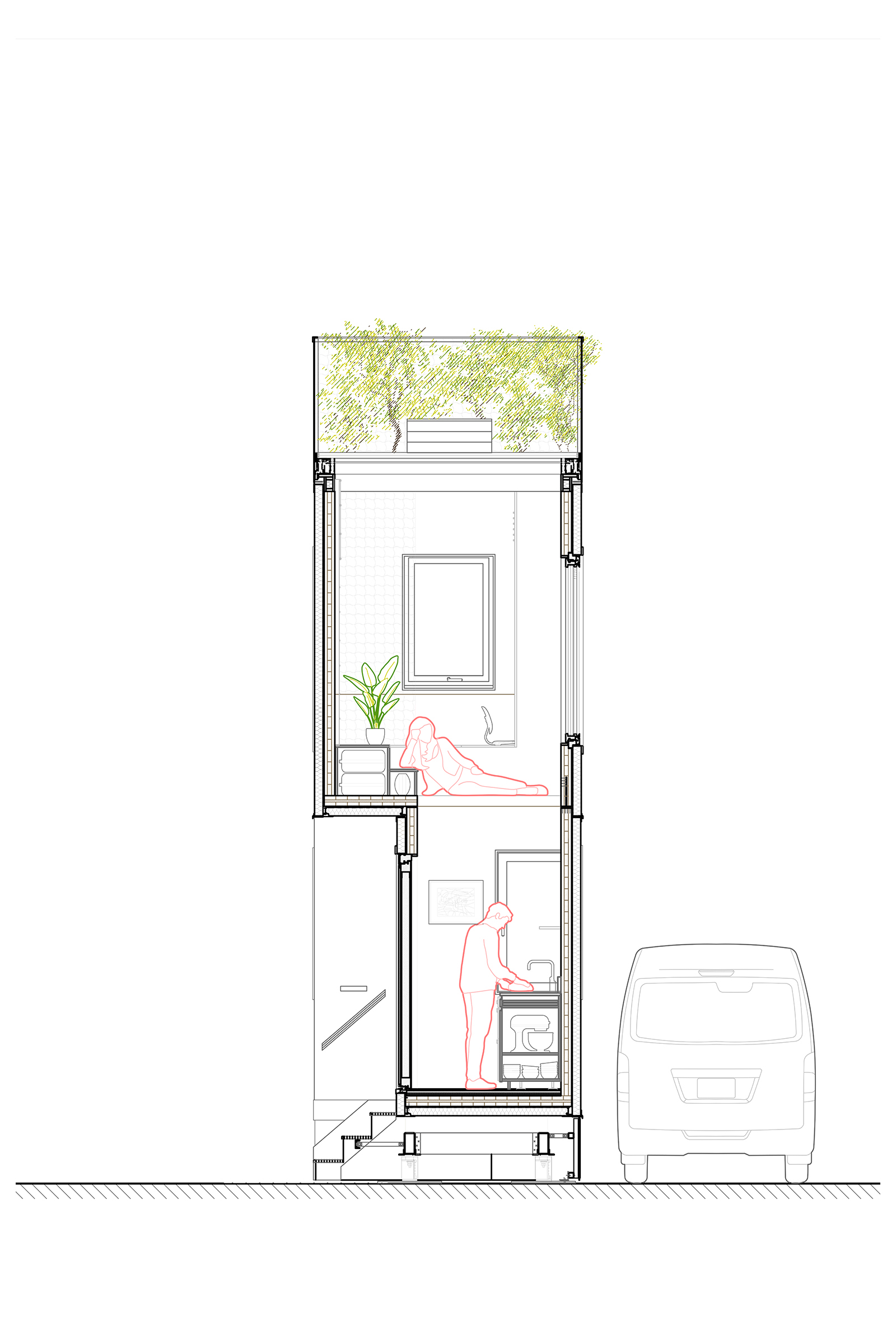
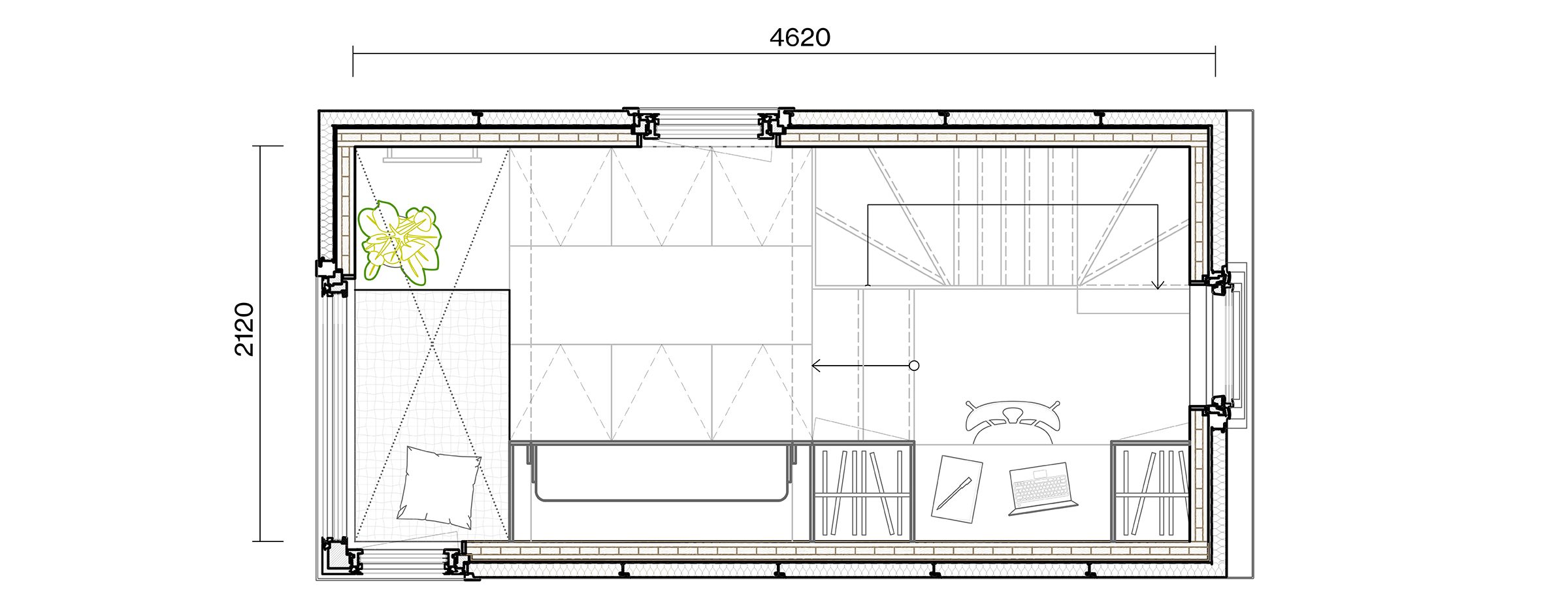
SPOT adapts to the rhythm of daily life. The lower level transforms into a light-filled living and working space. A couch for rest, a compact kitchen in use, and a private bathroom tucked efficiently below the staircase. Above, the mezzanine serves as a flexible workspace, with both standing and seated positions possible. The skylight opens to extend activity outdoors: a calm roof deck becomes a place for movement, reflection, or fresh air between work sessions. Every surface and zone is in use, nothing wasted, everything active.
Leisure and Social Living
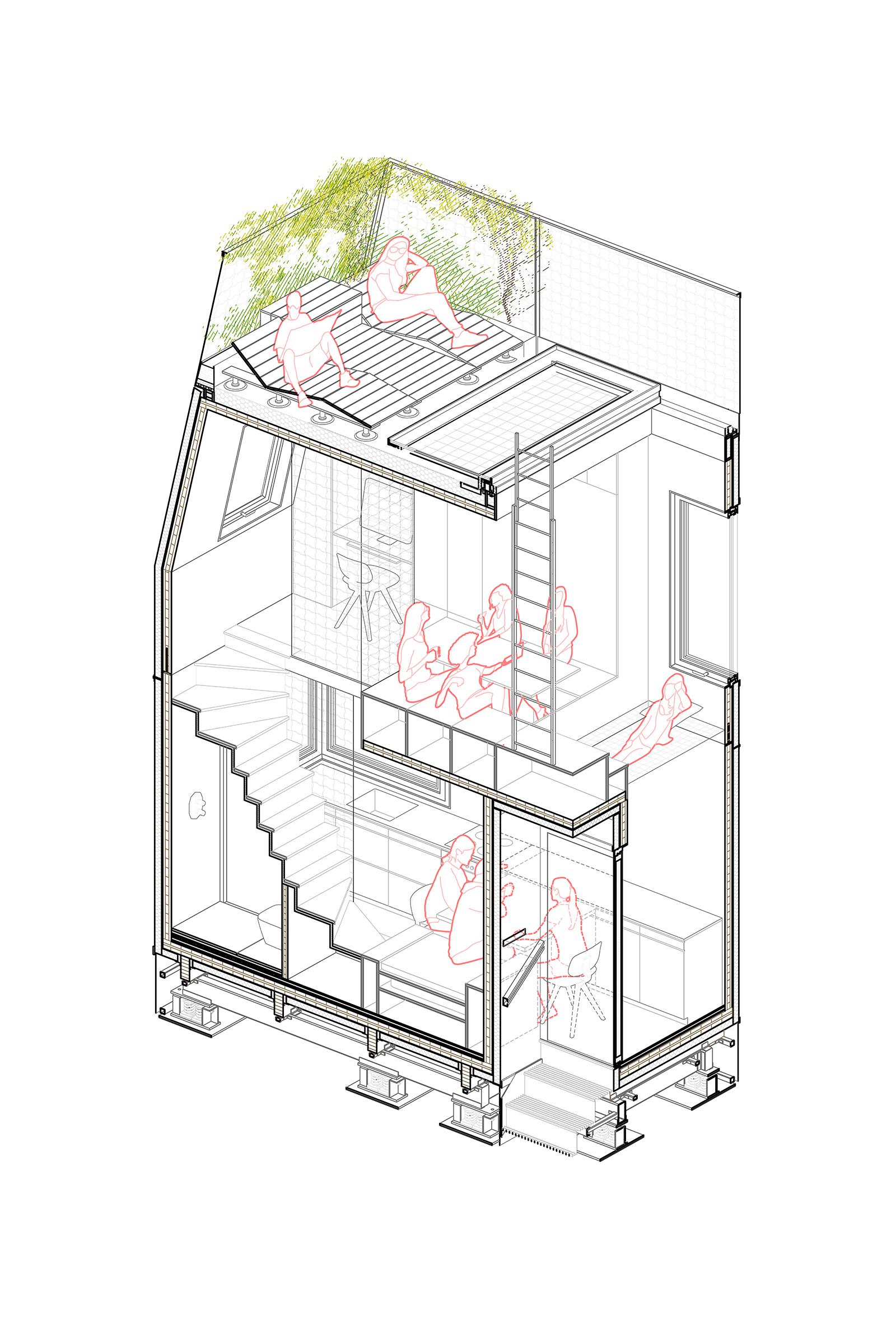
SPOT opens up for connection and comfort. The lower level becomes a shared dining space, with the pull-out table transforming the compact interior into a room for three. Above, the mezzanine shifts from workspace to lounge, where four can gather around the table to talk, play, or share a drink. A suspended net in the central void offers a relaxed spot between levels. The roof deck turns into an outdoor retreat: the skylight open, the platform raised, two lounge chairs set in the sun. Inside and out, SPOT expands beyond its limits to create room for down time, friends, and light.
Evening and Night Mode
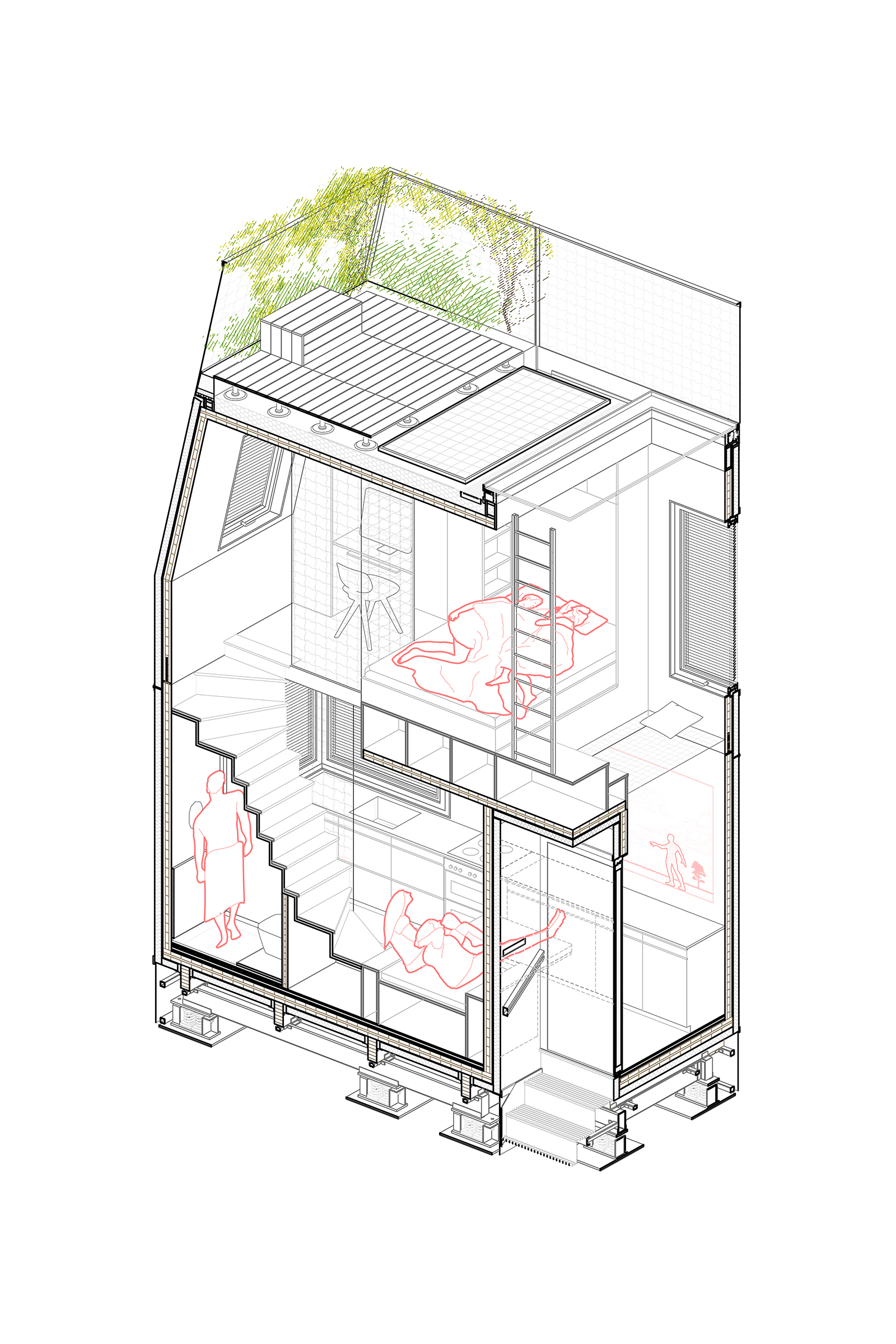
As the day winds down, SPOT transforms into a calm, private retreat. Thoughtfully integrated storage keeps the space serene and uncluttered. The ground floor turns cozy: the couch pulls out for a cinematic moment with a short-throw projector, inviting two to relax. In the bathroom, the toilet converts seamlessly into a shower, supporting the compact, multifunctional design. Upstairs, the worktable transforms into a murphy bed, offering a comfortable sleeping area for the couple. Integrated blinds on all windows ensure privacy, creating a calm, intimate atmosphere.
The System behind
SPOT
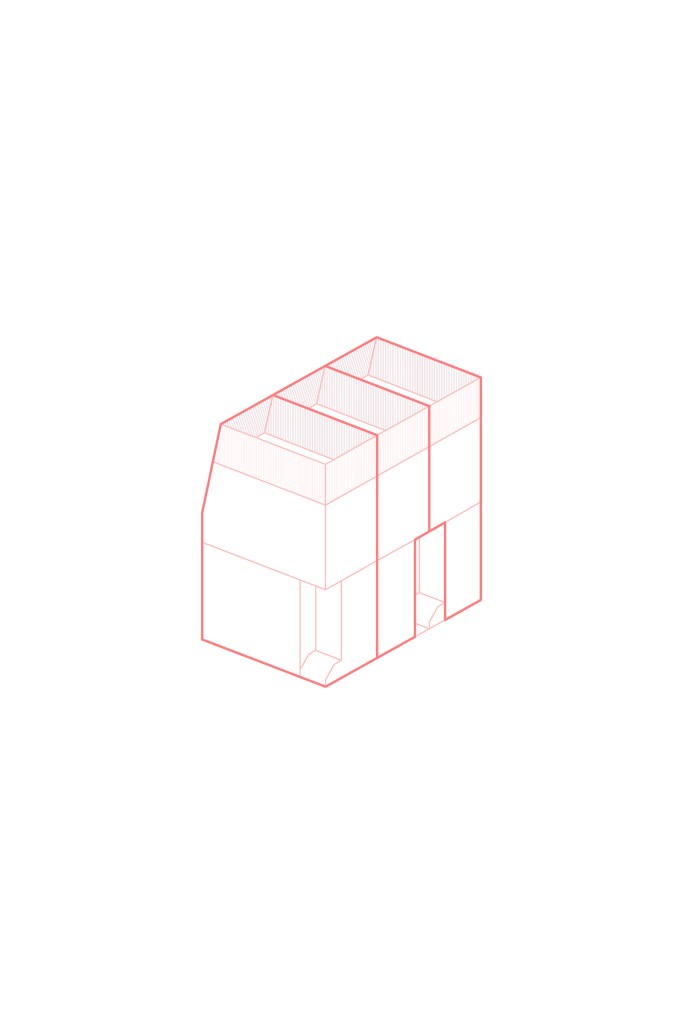
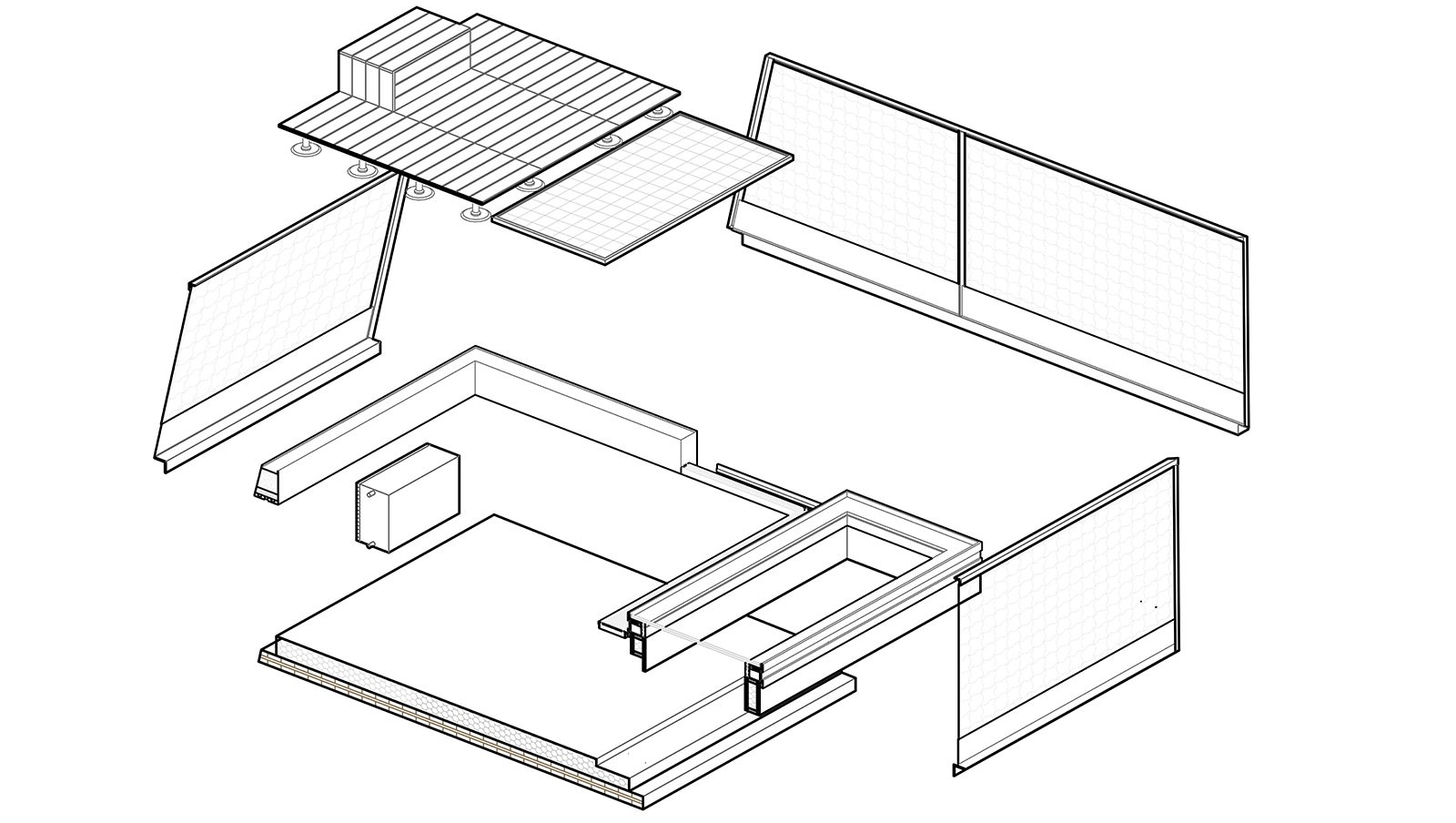
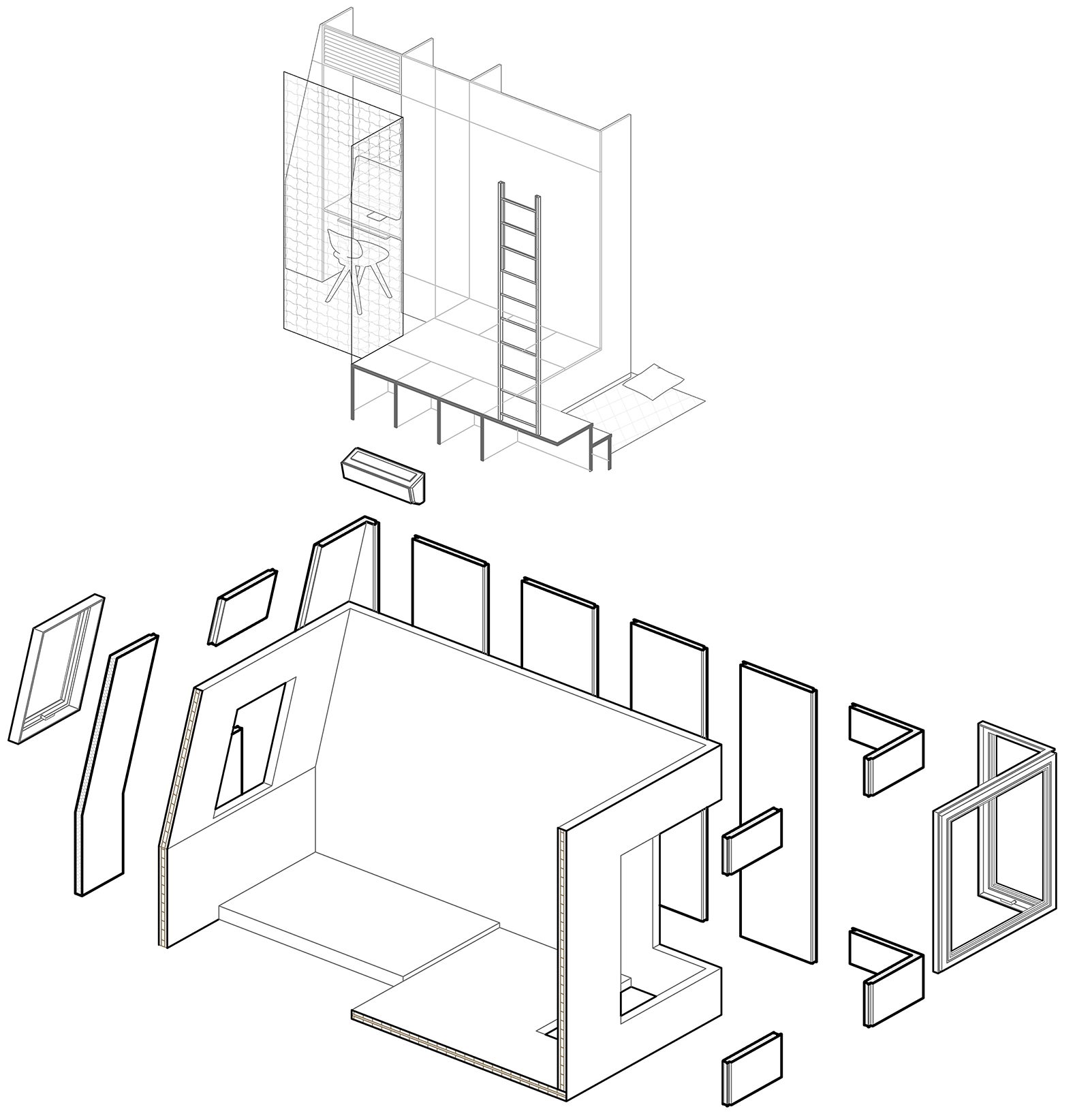
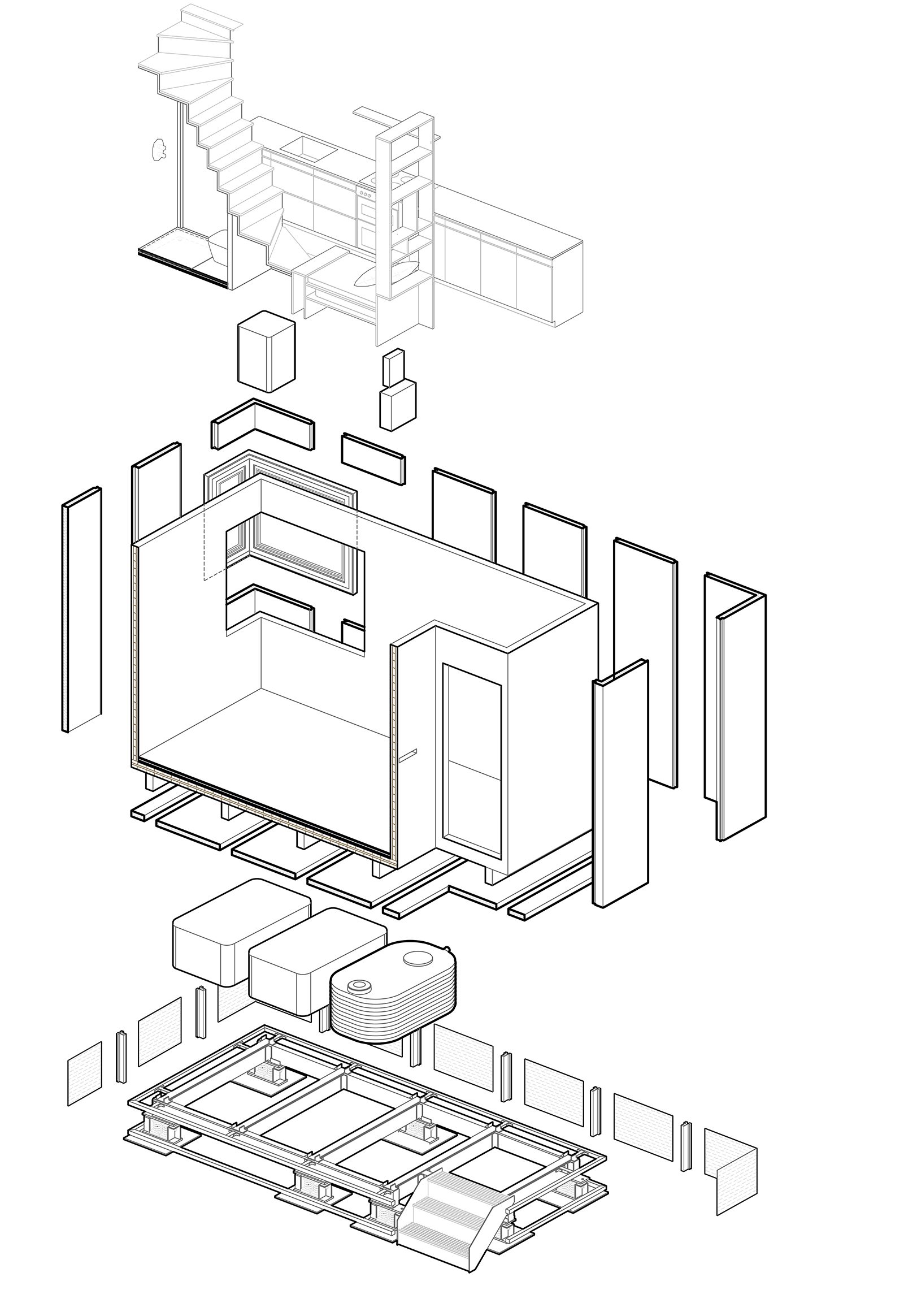
SPOT is a modular system engineered for mobility, efficiency, and resilience. Designed to fit within the footprint of a single parking space, each unit is split into two prefabricated CLT modules that can be transported by a standard truck and installed in hours.
Every element of SPOT follows the same logic of modularity: scalable, reversible, and built for circular use. Its structure, cladding, and connections are standardized for rapid assembly and disassembly, allowing the unit to move as easily as the people who live in it.
Modularity and Flexibility
SPOT is designed as a modular system, split into two prefabricated units that can be transported on a standard truck and installed rapidly on-site. Each module is designed to integrate seamlessly, both structurally and functionally, allowing flexible combinations for different urban contexts. The modular approach ensures that SPOT can adapt as city policies evolve, as demand changes, or as parking lots are reimagined.
Transport and Installation
The design is tailored for urban logistics: modules are dimensioned to fit standard transport vehicles, minimizing handling complexity. On-site, installation is simplified with pre-fitted connections, allowing SPOT to be secured quickly and safely without extensive construction, making each deployment efficient, reversible, and minimally disruptive to the city.
Self-Sufficiency and Safety
Each unit is self-sufficient, incorporating energy generation, water management, and climate control systems to reduce reliance on city infrastructure. While fully self-sufficient, SPOT can optionally tap into existing city utilities for added convenience, without ever relying on them. This combination allows SPOT to function independently without compromising reliability or resilience.
Acoustics and Vibration Control
Traffic and city noise can impact even the most compact homes. SPOT tackles this with a multi-layered approach: the CLT structure rests on restrained spring isolators, tuned to damp low-frequency vibrations from surrounding traffic, while the floor, walls, and façade layers are optimized to minimize sound transmission. Combined with airtight window and façade detailing, this system ensures a quiet, comfortable interior in dense urban environments.

 Eclective Studio